


While theatre today may be looking to become more inclusive and equitable, what cannot be ignored is the storied effort and perseverance of minority groups to create and contribute art on their own terms, despite an entertainment landscape that did not represent them. Due to its decision to highlight queer humanity, support queer artists, and showcase queer storytelling, Quince Productions served to highlight a minority community in a city that was (and remains) lacking in real representation.
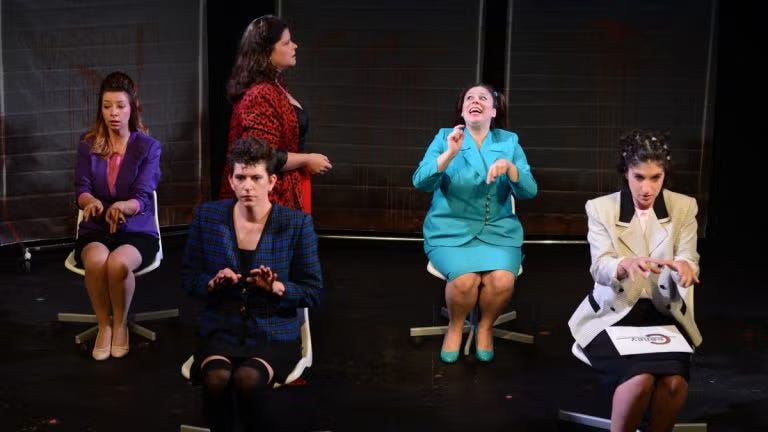
A small theatre company that bounced around several rental theaters throughout the city, Quince regularly showcased queer stories and generally hired queer artists to tell those stories. Quince was instrumental to the increase of representation for queer stories in Philadelphia. Quince Productions was founded in 2008 by Rich Rubin, who also acted as Artistic Director. Their inaugural season included only two shows: a production by members of The Bang Group (A NYC based contemporary theatrical dance troupe), and a staging of the play Niagara Falls by Victor Bumbalo.
Rubin had the desire of starting a company to “direct (and produce, but mainly direct) the kinds of shows that interested [him] without having to apply to existing companies and ‘prove [himself]’.”
He noticed that Philly theatre was lacking in the representation of LGBTQIA stories on its stages, and that the ones that were being presented were not benefiting from the lived experiences of queer artists. As he puts it, “so often it seemed to me that theater companies were like ‘wow, aren’t we cool, we’re doing a gay play’ and I wanted this to be the norm for our company rather than the departure.”
Quince would continue a similar production pattern for the next few years: producing one main stage play, accompanied by either a series of Cabarets or other theatrical performances. In August of 2011, Quince launched a festival that shone a light on queer stories, titled GayFest. The festival started with four plays, all focused on stories about the LGBTQIA community. In the years that followed, Gayfest grew in popularity, with audiences in Philadelphia looking forward to it every August. It became what Quince was most renowned for, and they eventually began to partner with QFlix (a queer cinema festival) and others.
As Rubin puts it, “I think there is a great advantage to an entire festival devoted to the broad spectrum of LGBTQIA work, which allows people to see what a rich community we are and also to seek out the plays that most interest them. From a show whose main characters are lesbians and a trans man to a MMF triangle to a drag queen and lesbian falling in love to a gay man dealing with his onetime bully…there was such a richness and variety that it was a very exciting month of theater for me--and, I trust, for audiences.” By the time Gayfest would come to an end in 2016, it was producing four full-length plays, as well as several smaller readings of new works, in addition to a return performance of The Bang Group.
In 2016, Rubin decided (for personal reasons) that it was time to move to a new city. As apparent to any who worked with him, there could be no Quince Productions without Rich Rubin. Thus, Quince Productions relocated with him to Sonoma County, California, and in the process Philadelphia lost one of its big voices in producing LGBTQIA stories.
In addition to the queer community and other audience members each season, Quince Productions was extremely influential and important for the queer artists in the city, who were able to craft and develop stories about people like them. These stories had fully fleshed out real characters, not just the surface-level stereotypes that are so often seen in more commercial theatre, and all-too-often all the depth a queer performer gets to explore.
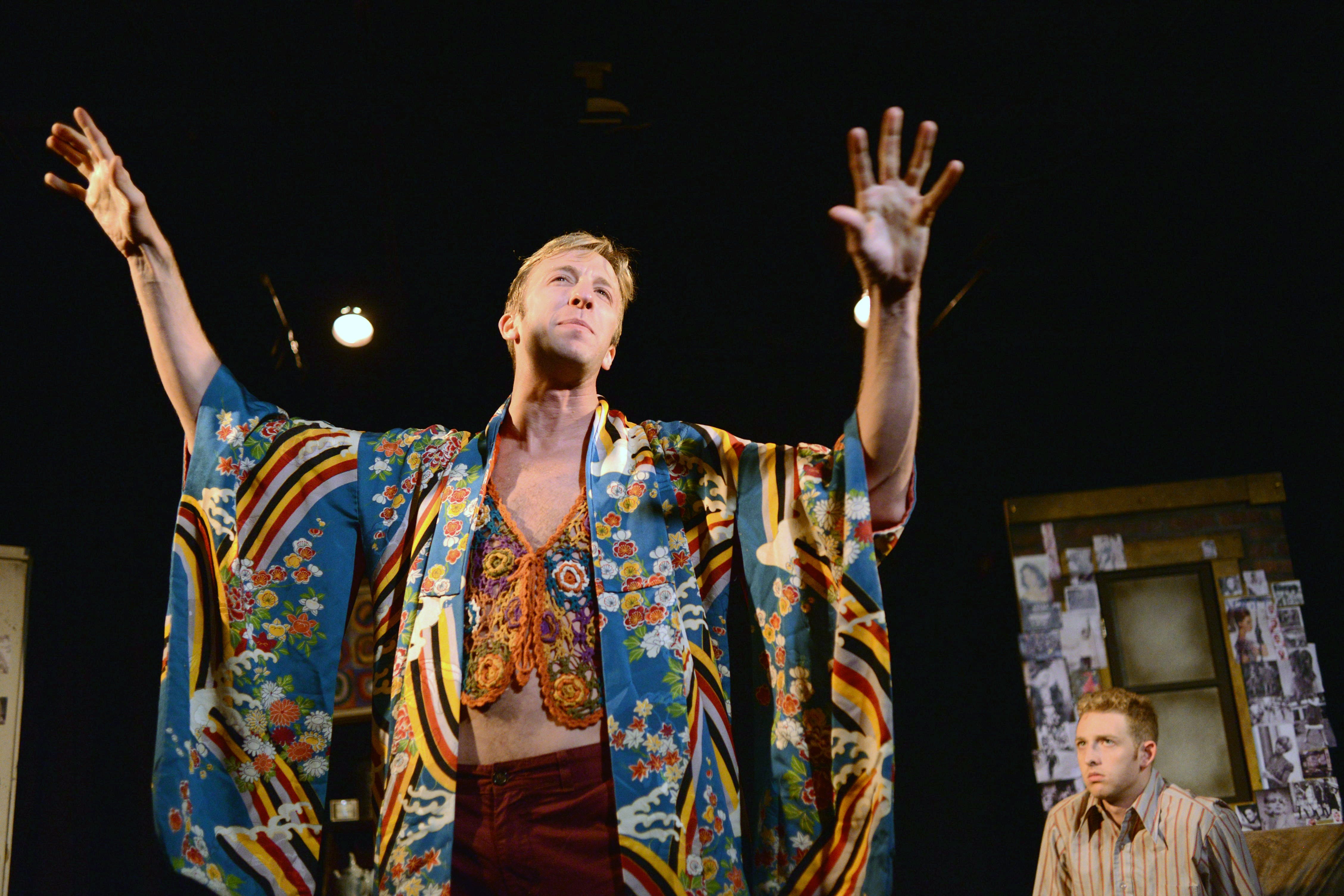
As Quince was a smaller scale company, they weren’t always able to offer the same competitive rates of pay that some of the larger theatre companies were able to, however, this often worked in Quince’s favor, as they were able to work with a younger generation of theatre artists, giving some people their first paying gigs within the Philly theatre community. It was a launchpad theatre, helping young artists gain important experience and vital community.
“Quince was a theatre that gave a lot of people their start, especially during GayFest. It was a chance to work on shows during the summer when most theaters weren’t producing. It kinda felt like our own local summer stock. Many people worked on more than one show in the festival and we all came out to support each other. That kind of camaraderie feels like it’s missing now that Quince is gone.” says Damien Figueras, a Philadelphia based Sound Designer.
Since 2016, Philadelphia has seen the rise of a few smaller companies, opening with the intention of producing queer art and stories, including The Strides Collective, Theatre by Development, and Jaffe St. Queer Productions, as well as the continued success of older queer focused companies such as Mauckingbird Theatre and The Bearded Ladies Cabaret. However, we’ve yet to see another theatre produce the sheer number of LGBTQIA productions that Quince was able to produce annually.
The theatre scene in Philly has not returned to that volume or diversity of queer representation yet, but it is certainly on its way. It would be a shame if this chapter of the queer theatre of Philadelphia was lost to the annals of time. Quince Productions held a very special place in this city’s theatre history, and more importantly: its community.